Summary: Brazil's World Cup record is unmatched: five titles, 22 appearances, and 114 matches. From Pelé's br
Brazil is the only nation to have competed in every World Cup since the tournament's inception in 1930. That alone is a remarkable feat of consistency, but it's the five titles—1958, 1962, 1970。1994, 2002—that define Brazil's World Cup record as the most successful in history. No other country has lifted the trophy more than four times. Yet the record is not just about silverware. It's about a legacy of attacking football, a conveyor belt of talent, and a handful of traumatic defeats that still sting decades later.
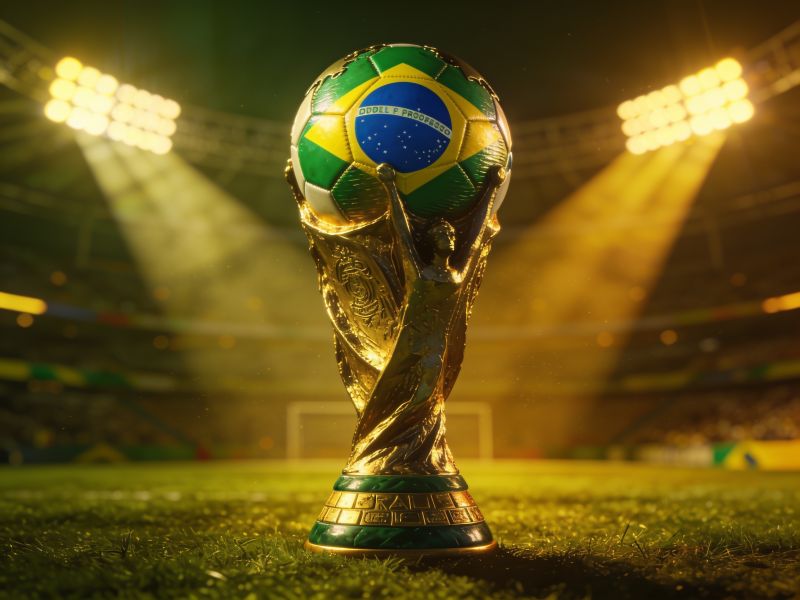
Consider the numbers. Brazil has played 114 World Cup matches, winning 73, drawing 19, and losing 22. They have scored 237 goals and conceded 108. In 22 tournaments, they have reached the semi-finals 11 times, the final seven times, and finished as runners-up twice (1950 and 1998). The 1950 defeat to Uruguay in the final group stage decider at the Maracanã—the Maracanazo—remains a national wound. The 1998 final loss to France。with Ronaldo's mysterious pre-match convulsion, is another scar. But between those low points, Brazil's World Cup record includes moments of pure brilliance: Pelé's hat-trick in the 1958 semi-final against France, Carlos Alberto's thunderous team goal in the 1970 final, Romário's penalty-box cunning in 1994, and Ronaldo's redemption double in 2002.What does Brazil's World Cup record tell us about the country's football identity?It reveals a stubborn commitment to joga bonito—the beautiful game—even when pragmatism might serve better. The 1994 squad, led by Dunga, was derided at home for its defensive style, yet it delivered the first title in 24 years. The 2002 team, with the "Three Rs"—Ronaldo, Rivaldo, Ronaldinho—combined flair with efficiency, winning all seven matches. Since then, Brazil's World Cup record has cooled: quarter-final exits in 2006, 2010, 2018。and 2022, plus the infamous 7-1 humiliation against Germany in 2014 on home soil. That semi-final loss in Belo Horizonte was more than a defeat;it was a psychological rupture. The team hasn't reached a final since 2002.Critics argue that Brazil's World Cup record is living off past glories. The rise of European club football's tactical rigidity, the early export of Brazilian teenagers, and a lack of sustained coaching philosophy have all been blamed. Yet the raw talent pipeline remains. Vinícius Júnior, Rodrygo。and Endrick suggest the next chapter is being written. The 2026 tournament in North America will be a test: can Brazil extend its record to six titles, or will the gap since 2002 stretch to 24 years?
For a nation that measures time in World Cups, that question carries existential weight.Brazil's World Cup record is ultimately a story of extremes—unmatched joy and unimaginable grief, all played out on the largest stage. It's a record built not just on wins, but on a cultural expectation that Brazil must win beautifully. That burden is unique. No other country carries it. And whether you admire or criticize that standard, it's why every four years。the world watches Brazil first.