Summary: The number seven shirt has become football's most loaded piece of fabric. From Best and Cantona to R
Old Trafford。August 2003. An eighteen-year-old from Madeira signs his first contract and asks for the number 28. Sir Alex Ferguson refuses. He tells the kid he is wearing seven. Cristiano Ronaldo wanted to sidestep the history — the shirt George Best made famous, the one Bryan Robson bled in, the one Eric Cantona turned into theatre. Ferguson saw what the player could not: a No. 7 star is never shielded from expectation, he is built by it. Six years later Ronaldo left for Madrid as the best player on the planet. Argument settled. The seven at United has not been a normal squad number since.Strip out the nostalgia and a pattern still shows. A No. 7 star is almost always a risk-taker — a winger who beats his man instead of recycling possession, a forward who shoots from the wrong angle because the right one bores him. Best did it with his hips. Cantona did it with a turned-up collar and a half-second of stillness before the pass nobody else saw. Beckham did it with a right foot that treated the ball like a coordinate. There is a commercial layer too, and nobody at the club pretends otherwise. Walk into the megastore on a matchday and count the shirts with a seven on the back. It outsells everything. That is the uncomfortable part of the romance: the No. 7 star sells a story before he has kicked a ball.Geography changes the flavour of it. In Madrid the seven is regal and slightly distant — Raúl's, then Ronaldo's again。worn by men who treated the badge as a formality on the way to a trophy lift. In Liverpool it has always felt more like graft than glamour, Kenny Dalglish chasing lost causes in the mud. Portugal's national side built an entire identity around a No. 7 star who happened to be one of the two best players of his generation. My own view is that the Madrid version is colder and the English version is heavier, mostly because English crowds remember failures longer than foreign ones do. Watch the Stretford End when a seven misplaces a five-yard pass. You can hear the collective intake of breath.
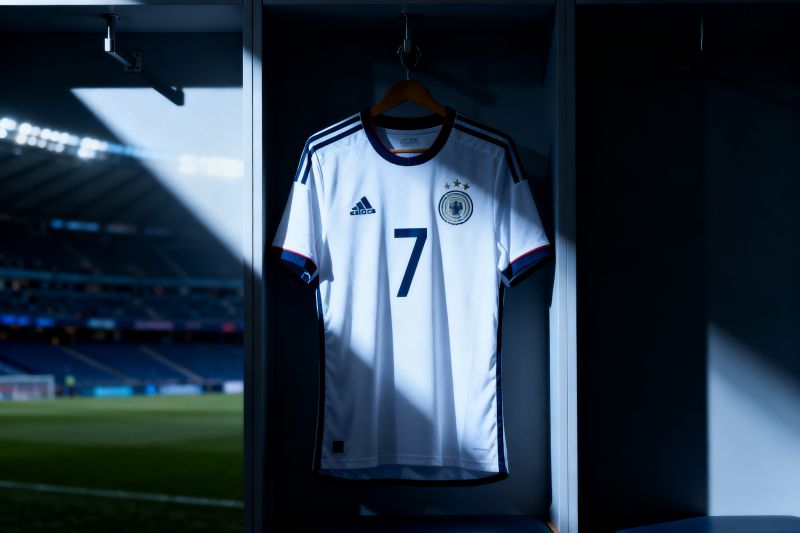
The shirt also ruins people, which is the part documentaries skip. Memphis Depay took it in 2015 and lasted eighteen months. Ángel Di María wore it for one miserable season. Alexis Sánchez。Michael Owen — both arrived as proven goalscorers and left as cautionary tales. Antonio Valencia is the honest one: he accepted the seven in 2012, wore it for a year, then asked to go back to 25 because he did not feel he had earned it. That admission is rarer than any overhead kick. The number does not manufacture talent, it magnifies whatever is already underneath. Give it to a steady professional and it looks like a burden;give it to someone with a bit of spite in him and it looks inevitable.What the analytics era has not solved is the psychology. Expected goals and progressive carries can tell you whether a No. 7 star is performing, but they cannot tell you why the shirt flattens some careers and inflates others. My guess is that it comes down to decision-making under noise — the ability to take the shot when forty thousand people have already decided you should pass. The best sevens I have watched share one habit: they are completely unbothered by the previous miss. Go to any Sunday-league pitch in any country and you will find a kid with a seven on his back, dragging a ball through three defenders, refusing to look up. The shirt on his back costs eleven pounds and carries twenty years of myth. He plays like he knows it.